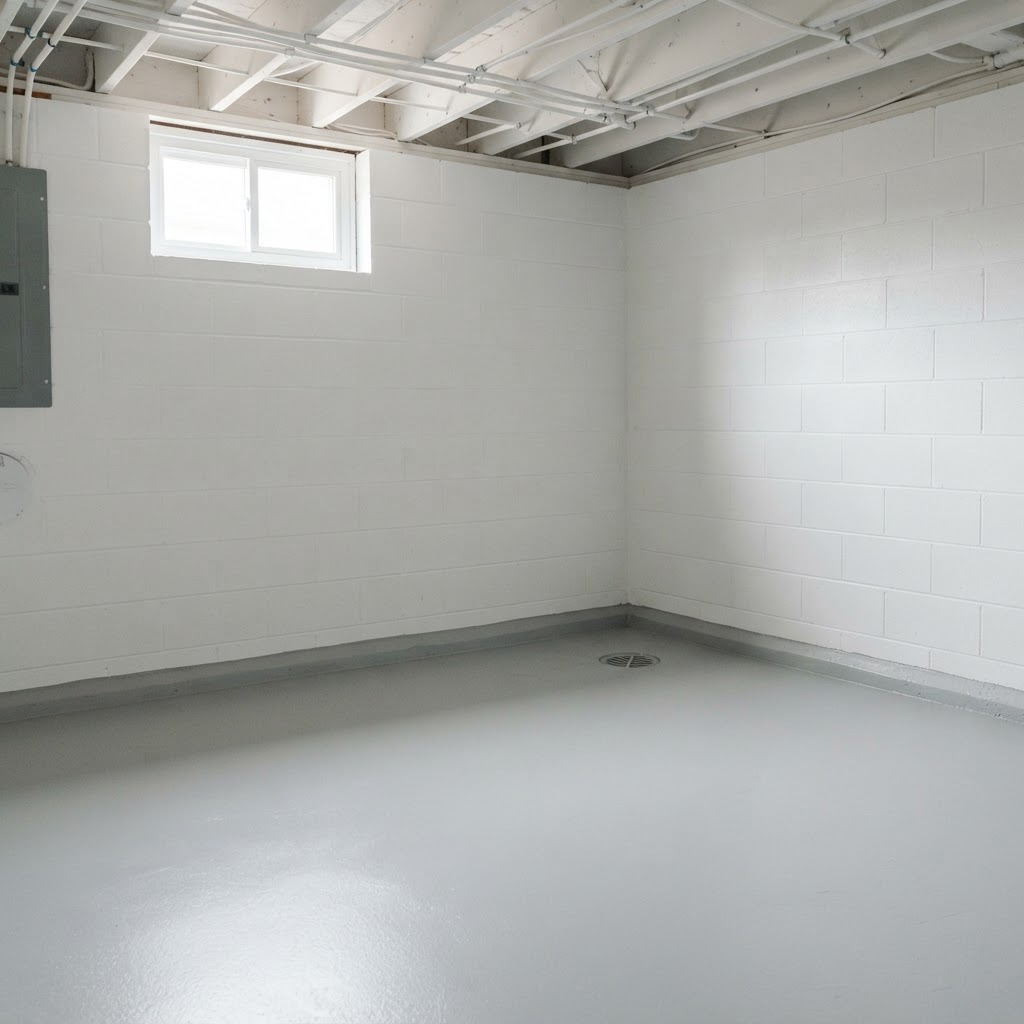
Waterproofing a basement in Muncie usually comes down to two choices: catch water once it reaches the inside of the wall, or stop it at the outside face. Which fits depends on your house. A 1920s block foundation near Ball State behaves differently from a 1990s poured wall in a Yorktown subdivision, and a ranch on low ground near the White River sees more groundwater than a house on higher ground north of McGalliard Road.
We connect you with an independent local contractor who can inspect and recommend. Call (317) 798-0634.
Interior Drain Tile and Sump Systems
This is the most common fix for seepage in Delaware County basements.
- The crew removes a strip of concrete floor, typically about 12 inches wide, along the leaking walls or the full perimeter.
- They dig down to around footing level, lay perforated pipe in washed stone and slope it toward a sump basin.
- On block walls they often drill weep holes into the lowest course so water trapped in hollow cores can drain.
- A dimple membrane or wall flange is set at the wall base so water running down the wall drops into the drain.
- The floor is re-poured and the sump discharges outside, well away from the foundation.
Why it works on Muncie clay: clay soil can't drain water away quickly, so pressure builds under the slab and at the floor-wall joint. An interior drain relieves that pressure instead of trying to hold back saturated ground.
Limits: it doesn't keep the outside of the wall dry, and it depends on the pump running. Discuss a battery backup; spring storms and power outages often arrive together.
Exterior Excavation Waterproofing
The contractor digs along the outside of the foundation, cleans the wall, repairs cracks, applies a true waterproof membrane (not just damp-proofing tar), adds drainage board and new footing drain tile, then backfills with stone instead of the original clay.
When it makes sense:
- The wall is also bowing or needs structural repair from outside.
- One wall leaks and it is easy to reach (no driveway, porch or patio in the way).
- You want to keep a finished basement intact.
Trade-offs:
Cost and disruption. Landscaping, steps and walks get torn up, and wet clay makes digging slow. Ask how the contractor handles backfill and spoil removal.
Combining Methods
Many Muncie jobs mix both: exterior work on the worst wall plus interior drain on the rest, or an interior system plus regrading and buried downspout lines. A good contractor explains why.
Drainage Basics on Clay Lots
- Downspouts should discharge at least several feet from the house, farther on flat lots where water lingers.
- Soil next to the wall should slope away; settled backfill on older homes often slopes toward the house.
- Window wells need covers, gravel and a drain.
- Don't let a sump discharge back toward the foundation or onto a neighbor's lot.
What It Costs
From HomeGuide's basement waterproofing cost guide:
- Interior waterproofing: about $6,000 to $12,000
- Exterior waterproofing: about $10,000 to $18,000
- Interior French drain: about $4,000 to $17,000
- Exterior drain: about $30 to $90 per linear foot
- Regrading: about $1,000 to $5,000
These are national averages, not a Muncie quote. More detail in the cost guide.
Permits
Exterior excavation, drainage tie-ins and structural repairs may require permits from the City of Muncie or Delaware County depending on your address. Ask the contractor who pulls them.